


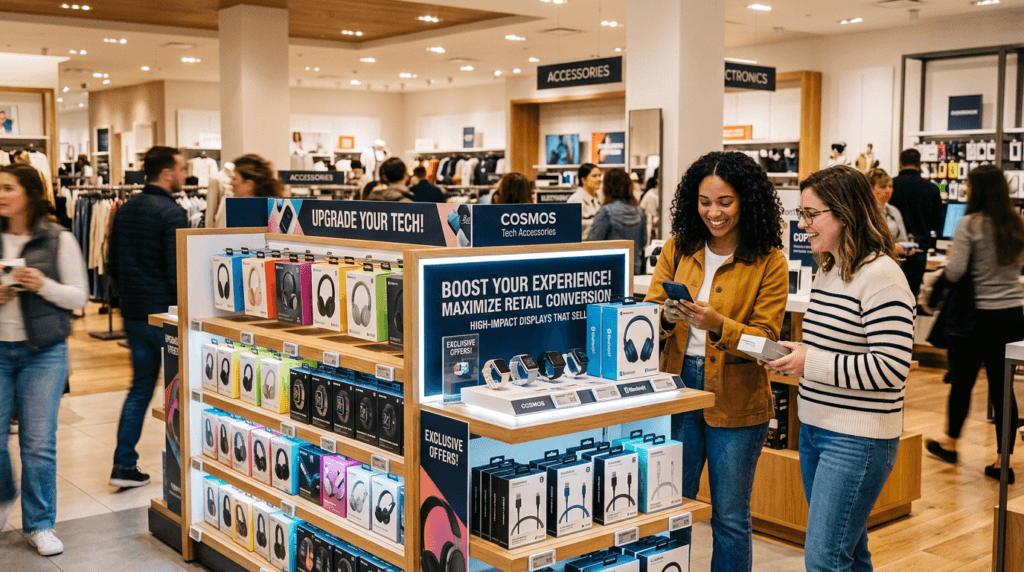
In retail environments crowded with competing products, capturing shopper attention at the moment of decision is critical. Brands invest heavily in product development and marketing campaigns, yet many lose sales simply because their offerings fail to stand out on the sales floor. High-impact in-store displays address this challenge directly by transforming passive shelf space into active selling tools that influence purchasing behavior and drive measurable improvements in conversion rates.
The Strategic Power of Point-of-Purchase (POP) Displays
Point-of-purchase displays serve as silent salespeople on the retail floor, influencing decisions at the exact moment shoppers are ready to buy. These installations create visual interruptions that draw attention, communicate value propositions and prompt immediate purchasing action.
Effective display programs depend on matching the right format to specific campaign objectives and shopper behaviors. When placement, materials and brand messaging align properly, displays become powerful conversion tools that stand out in crowded retail environments. According to Great Northern Instore, “POP displays can increase sales while being a great advertising tool for business.”
How Can Retailers Measure the Sales Impact of In-Store Displays?
Understanding how to measure the sales impact of displays requires tracking specific performance indicators. Sales lift represents the most direct metric, comparing product movement during the display period against baseline performance from prior weeks.
There are also additional tracking methods that provide deeper insight into effectiveness. Heat mapping technology and traffic counters reveal whether installations successfully draw shoppers into specific aisles. Customer engagement metrics, including dwell time and interaction rates, offer qualitative data about interest levels and decision-making behavior.
According to a recent survey, 76% of shoppers say they’ve discovered a new product or brand through retail displays. Also, nine out of 10 participants ended up making an impulse purchase.
Also Read
How to Pick the Right Partner
The value of POP displays is evident, but executing these strategies successfully requires partnering with experts who understand both the technical requirements of retail environments and the psychological triggers that drive shopper behavior. Great Northern Instore specializes in designing and manufacturing custom retail displays that combine positioning strategy with durable construction.
With capabilities spanning corrugated, metal, wood and plastic components, the company delivers turnkey solutions from initial design through final distribution. This integrated approach ensures installations meet the specifications of major retailers while achieving the performance metrics brands require.
How to Choose Between Temporary and Permanent Displays
The decision between temporary and permanent formats depends on campaign duration, budget allocation and brand positioning goals. For example, Great Northern Instore states that “Temporary displays are usually made from a corrugated material that typically lasts for a few weeks or months, while more permanent displays can endure for several years.”
As such, cardboard installations designed for short promotional cycles excel at seasonal campaigns, product launches and limited-time offers where flexibility matters most. Metal, wood and acrylic constructions built for extended retail floor presence work best for established product lines requiring consistent brand representation. Temporary formats account for 60% of market share, driven primarily by seasonal promotions. Permanent installations hold the remaining 40% and are used predominantly for long-term branding in sectors like electronics and luxury cosmetics.
Additionally, budget considerations often favor temporary installations for brands testing new markets. Permanent options require a higher initial investment but deliver a lower cost per impression over time for items with a stable retail presence.
Boost Basket Size With Cross-Merchandising
Cross-merchandising strategically places complementary items in proximity to encourage multiple purchases during a single shopping trip. This approach capitalizes on natural associations that shoppers already understand. Placing salsa near tortilla chips, phone cases near smartphone displays, or batteries near electronic toys reduces the friction between need recognition and fulfillment.
The psychology behind cross-merchandising relies on purchase momentum. Once a shopper commits to buying one item, the threshold for adding related purchases decreases. Research on cross-effects shows that promoting one product generates positive sales impacts on related offerings, increasing overall transaction values.
Success requires understanding the shopper journey and anticipating logical combinations. Visual groupings should feel natural and intuitive to shoppers, making additional purchases seem like common sense.
Welcome Shoppers With the Decompression Zone
The decompression zone refers to the first 5 to 15 feet of retail space immediately inside store entrances. This transitional area serves a crucial psychological function, allowing shoppers to adjust from the outside environment, orient themselves to the store layout and shift into shopping mode.
It serves as the appetizer of what’s further inside the store, and it’s not the place for promotions or excessive signage. Great Northern Instore states, “Keep the decompression zone uncluttered and simple since shoppers in this area can become distracted and walk right past any displays.” There should only be soft lighting or well-placed displays to create a welcoming atmosphere.
This area eases customers in and sets the stage for a successful shopping experience. Most people instinctively turn right after passing through the decompression zone, which makes the first right-hand wall the most valuable merchandising real estate in the entire store. Leading brands reserve this space for high-margin items, new launches and offerings requiring maximum visibility.
Understanding the decompression zone allows brands to position installations in high-impact locations where shoppers actively process messaging and respond to visual cues.
Frequently Asked Questions
In-store displays play a key role in shaping shopper decisions, and these frequently asked questions explore how brands can use them to improve visibility and sales performance.
1. What kind of store display makes people buy more?
Point-of-purchase displays transform passive shelf space into active selling tools by capturing shopper attention, communicating product value and encouraging purchasing decisions at the point of sale.
2. How can brands measure the effectiveness and ROI of POP displays?
Brands can measure POP display performance by tracking key indicators, such as sales lift, which compares product sales during the display period against previous baseline performance.
3. Which point-of-purchase displays have the best return on investment?
The choice between temporary and permanent displays depends on campaign goals, budget and brand strategy. Temporary displays are ideal for seasonal promotions, product launches and limited-time campaigns. Permanent displays are better suited for long-term brand visibility and established products requiring consistent retail presence.
Turning Displays Into the Most Valuable Sales Tool
In-store displays directly improve retail conversion rates, and selecting display formats based on campaign duration ensures efficient budget use. Cross-merchandising complementary products encourages multiple-item purchases, and respecting the decompression zone makes shoppers more receptive to spending and brand messaging. This comprehensive approach to retail merchandising acknowledges how shoppers actually move through and make decisions within physical retail environments.